Toronto has one rule that catches many newcomers: unless a sign says otherwise, you can only park on a city street for three hours. Add permit-only residential streets, hydrant distances and snow-route bans during big storms, and a parking ticket is easy to collect. This guide covers the City of Toronto’s main on-street parking rules, how temporary permits work, what changes in winter and how to dispute a ticket.
At a glance
- Default time limit: 3 hours on public roads unless posted signs say otherwise.
- Fire hydrants: no parking within 3 metres, measured along the roadway in front of the hydrant.
- Temporary permits (2026, plus HST): $20.74 for 24 hours, $29.97 for 48 hours, $44.94 for 7 days.
- Snow routes: parking banned when a “major snowstorm condition” is declared; fine of up to $500.
- Dispute a ticket: request a screening review within 15 days to avoid an owner search fee.
The three-hour rule
According to the City of Toronto, an unsigned maximum three-hour parking limit applies on public roads unless signs set a different limit. Many residential streets post shorter limits (one hour, 15 minutes) or restrict parking to permit holders during certain hours. The rule is in Toronto Municipal Code Chapter 950, Traffic and Parking. For longer stays, use a paid lot or a permit.
Signs: no parking, no standing, no stopping
- No Parking: you may stop only to load or unload passengers or goods.
- No Standing: you may stop only to pick up or drop off passengers.
- No Stopping: you may not stop at all, except to avoid a collision or when directed by police or a signal.
Many major roads become No Stopping zones during rush hours, and vehicles can be towed. Read the full sign, including times and days.
Other common offences
- Parking within 3 metres of a fire hydrant (the distance is measured from the road in front of the hydrant, even if the hydrant is set back).
- Parking on a sidewalk or boulevard.
- Blocking a driveway or laneway.
- Parking in an accessible space without a valid Accessible Parking Permit displayed.
- Staying past the paid time at a Green P machine or meter.
Motorcycles and scooters can park at meters without paying, but they must respect time limits and are not exempt from permit parking.
Permit parking on residential streets
In many older neighbourhoods, from the Annex to Leslieville, houses have no driveway and residents park on the street with an annual or monthly permit. On those streets, overnight parking during posted permit hours is reserved for permit holders. Eligibility depends on your address and whether you have off-street parking. Ask the City’s Permit Parking office whether your street is in a permit area before you sign a lease that depends on street parking. If you are still choosing an area, our best neighbourhoods in Toronto guide covers which areas suit car owners.
Temporary permits for guests
Visitors to a permit street can use a temporary permit, subject to space. 2026 fees per space, plus HST:
| Permit |
2026 fee |
| 24 hours |
$20.74 |
| 48 hours |
$29.97 |
| 7 days |
$44.94 |
Buy online up to two weeks in advance, in person at the Permit Parking office (up to eight consecutive weeks) or by mail. Display the permit on the lower driver’s side of the windshield. Trailers and RVs are not eligible. The City adjusts these fees each year for inflation.
Winter parking: snow routes and plowing
Toronto does not have a blanket overnight winter parking ban on all streets. Instead:
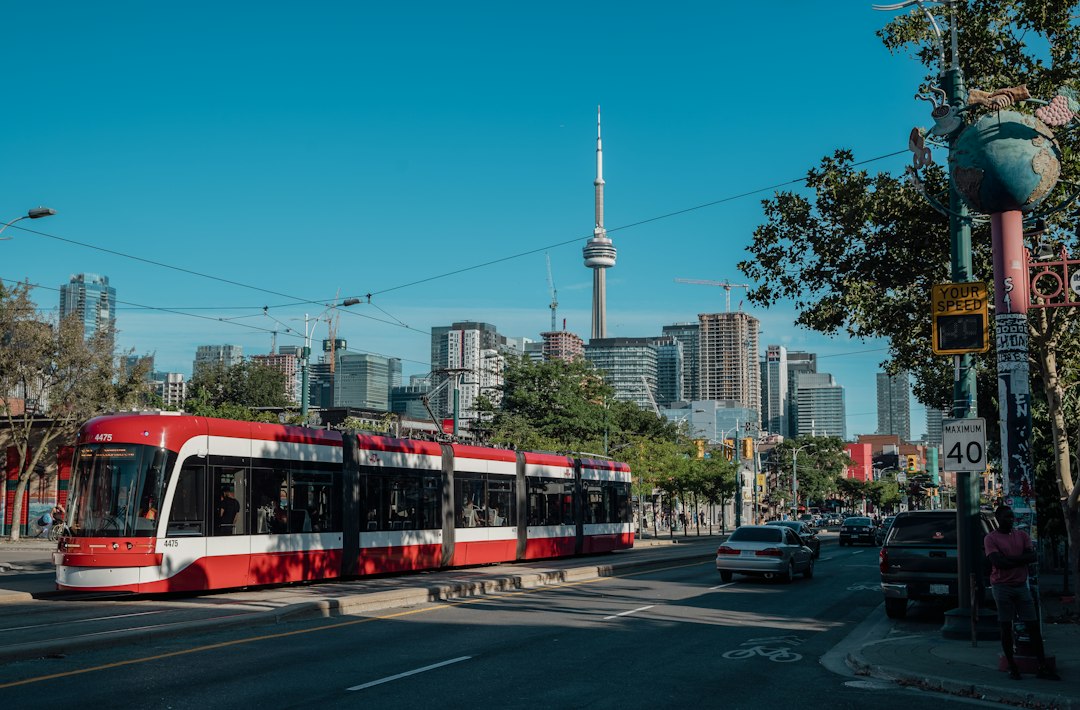
- When heavy snow is expected, the City’s General Manager of Transportation Services can declare a major snowstorm condition. Parking is then banned on signed snow routes, which are mainly downtown and include all streetcar routes. Parking there during the event can bring a fine of up to $500, and vehicles may be towed.
- During snow removal, crews post temporary orange “No Parking” signs on specific streets. Parking is prohibited until the signs come down.
- The City can move vehicles that block plows or emergency crews, even if they were legally parked, usually to a nearby street. If your car has disappeared from a major road, the City says to call Toronto Police at 416-808-2222.
Leave the car at home during big storms if you can and use transit instead; see our TTC guide.
How to dispute a parking ticket
Toronto handles parking tickets (called Parking Violation Notices) through an administrative penalty system at the City, not in court. The deadlines, counted from the date the ticket was issued:
| Deadline |
What happens if you miss it |
| 15 days |
Pay or request a screening review, or a $15.39 vehicle owner search fee is added |
| 30 days |
Pay or start a dispute, or a $32.10 late payment fee is added |
| 60 days |
Unpaid penalties lead to a $32.10 plate denial fee; you cannot renew your plate sticker until paid |
- Screening review: request it online with the ticket number; a screening officer can uphold, reduce or cancel the penalty or extend the time to pay.
- Hearing review: if you disagree with the screening decision, you can ask for a hearing with an independent hearing officer.
Missing a booked screening appointment costs $64.18 and missing a hearing costs $96.28. Paying online by credit card adds a 2.35% processing fee. Gather evidence early: photos of the sign, your permit, the meter receipt or the curb.
FAQ
Can I park overnight on any street in Toronto?
No. Many residential streets require a permit during posted overnight hours, and the three-hour limit applies everywhere unless signs say otherwise.
Is there a grace period on Green P meters?
Do not count on one. Pay for the full time you need; the Green P app lets you extend remotely where allowed.
Who gets the ticket if I borrowed a car?
Parking penalties are issued to the vehicle’s plate owner, who is responsible for paying or disputing.
General information only. Check posted signs and the City of Toronto’s parking pages for current rules and fees. Getting your licence? See our Ontario G1, G2 and G licence guide.
Last updated: November 2026





Comments are off for this post.